
September 5,2024
Debunking Myths About IP Math Tuition
By: Debbie Wong, Founder and Teacher, Debbie’s Learning Cove
(The following article is based on my opinion and observations as a tutor over the past decade.)
Read More

The Integrated Programme (IP) is designed for academically strong students and offers a rigorous six-year pathway leading directly to the GCE A-Level examinations or equivalent qualifications.
IP Mathematics places strong emphasis on conceptual understanding, mathematical reasoning and independent learning. While many students thrive in the IP environment, some benefit from additional guidance, regular practice and a structured approach outside school.
IP Math tuition provides that support. With clear explanations, carefully planned practice and timely feedback, students strengthen their understanding, build confidence and develop the problem-solving skills needed to excel.
Students join our IP Math tuition programme for different reasons. Some need additional support, while others wish to deepen their understanding and stay ahead of the curriculum. Many high-performing students attend IP Math tuition to deepen their understanding, stay consistently ahead of the curriculum and achieve their personal best.
At Debbie’s Learning Cove, our IP Math tuition programme helps students build strong mathematical thinking while providing the guidance and support they need to excel throughout the Integrated Programme.

At Debbie’s Learning Cove, we specialise in teaching the Advanced Mathematics component of the IP curriculum from Year 3 onwards. Our programme focuses on the Additional Mathematics topics that form the foundation for success in both the Integrated Programme and H2 Mathematics.
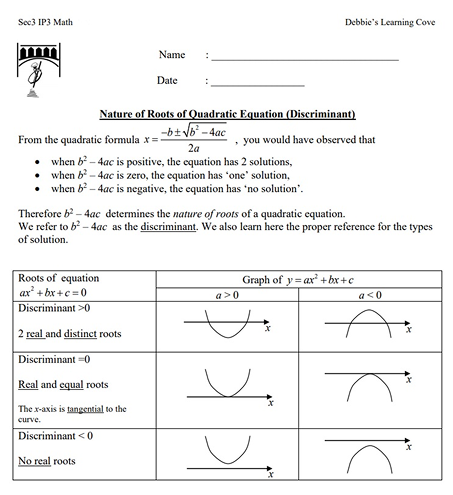
During each 2-hour lesson, students receive comprehensive in-house notes and carefully designed worksheets. Every topic is taught through clear explanations before concepts are reinforced with worked examples and guided practice.
Questions are carefully selected to cover the full scope of each topic, progressing from fundamental concepts to more challenging problems, including the open-ended questions commonly found in IP examinations.
Every topic is taught from first principles before students learn shortcuts and advanced techniques. Complex ideas are broken down into simple, manageable steps, allowing students to develop genuine understanding before moving on to more advanced applications.
Lessons are lively, engaging and memorable through the use of:
These teaching methods help students understand concepts more deeply, retain them more effectively and approach Mathematics with greater confidence.

At Debbie’s Learning Cove, we offer a continuous four-year Mathematics programme that supports IP students from Year 3 through to A-Level H2 Mathematics. Over the years, we have had the privilege of helping many students grow in confidence, develop strong mathematical thinking and achieve their academic goals.
Nothing is more rewarding than watching students transform from feeling discouraged by Mathematics into confident, independent learners.
Many of our students have:
One of the greatest joys of teaching is keeping in touch with our graduates. We are always delighted to see them gain admission to their dream university courses, including Medicine, Dentistry and Law, receive prestigious scholarships and go on to build successful careers.
We are grateful to have played a small part in helping our students achieve their dreams.
Learn from an Experienced IP Math Tutor
Every lesson is personally taught by Mrs Debbie Wong.
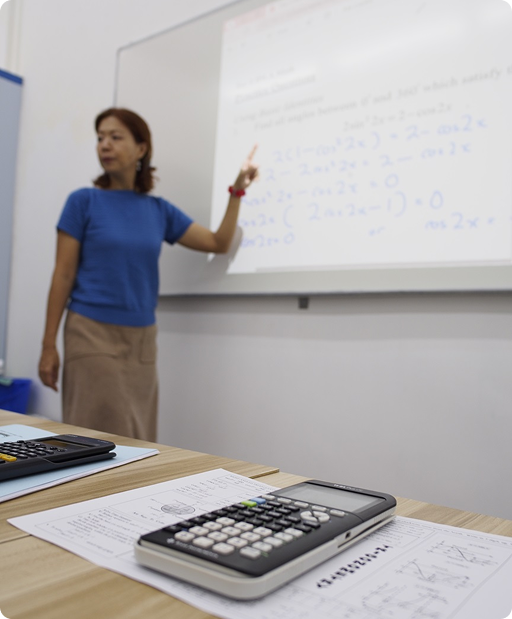


By building a strong conceptual foundation, students not only perform better in IP Mathematics but are also well prepared for the greater demands of H2 Mathematics in junior college.
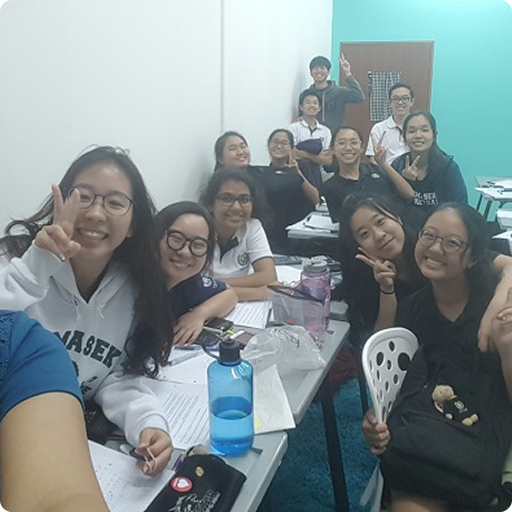
“Mrs Wong is a really kind and engaging tutor, and I can confidently say that she made a huge difference in both my academic performance and love for Math. With her enthusiasm, I often felt encouraged to ask questions, and she would always be supportive while clarifying my doubts. As a recent A-Level graduate who studied with Mrs Wong for 4 years, I would highly recommend her to anyone seeking a Secondary / IP / JC Math tutor!”
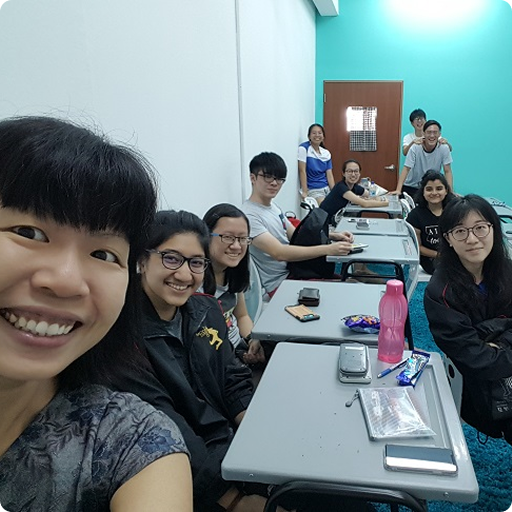
“I love Mrs Wong’s lively teaching style, and I cannot be more grateful for the help and patience she gave me throughout my ip3-4 journey
From the two years under Mrs Wong, I found joy and interest in math and my grades stabilised.
Will be taking H2 math thanks to Mrs Wong.”
Teaching Experience
Academic Achievements

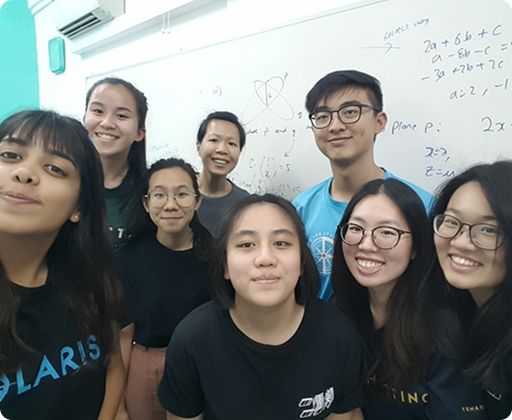
Unlike the O-Level track, IP students do not sit for the national O-Level examinations. As a result, school-based examinations play an important role in assessing each student’s progress and readiness for the following academic year.
As the year-end examinations approach, lessons become increasingly focused on revision and examination preparation.
Students benefit from:
At Debbie’s Learning Cove, every lesson is conducted simultaneously both onsite and live via Zoom, allowing students to learn in the way that suits them best.
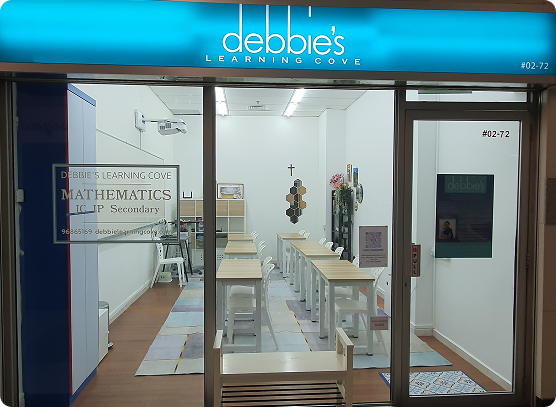
Students attending our centre at Roxy Square enjoy:

Students joining from home receive exactly the same:


Not necessarily. Although each IP school has its own syllabus, the core Additional Mathematics topics are largely similar across schools. Our IP Math tuition Singapore programme focuses on building a strong foundation in these core concepts and develops the mathematical thinking needed to handle the additional school-specific topics confidently. Our programme is suitable for students who: Students who attend lessons regularly, complete homework and participate actively achieve the greatest progress. Year 3 is the ideal time to begin. Starting early allows students to build a strong foundation before the syllabus becomes more demanding. Students who join in Year 4 can still benefit, but those who start earlier often gain greater confidence and experience less stress before the Year 4 examinations. Our IP Math tuition programme focuses on the Advanced Mathematics component of the IP curriculum. Where appropriate, relevant Fundamental Mathematics topics are also reinforced. Students often find that stronger algebraic skills and deeper conceptual understanding improve their performance in both Mathematics subjects. Yes. Every student receives carefully developed in-house materials, including: These resources have been refined over many years to prepare students for the wide range of questions found in IP school examinations.
Frequently Asked Questions
September 5,2024